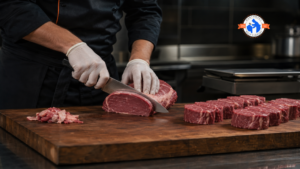
Open a case of strip loins during a November prep shift. Before the steaks reach labeled pans, a prep cook inspects each loin and trims it to the kitchen’s standard. Then come portioning, weighing, sorting the trim, packing, labeling, and cleanup. Those steps use the same skilled hours needed for banquet prep, catered orders, and regular dinner service.
Protein purchasing for restaurants also has to account for the knife work left in each format. At a steakhouse with an in-house butcher, whole strip loins give the chef control over every portion and leave trim that the kitchen already knows how to use. At a hotel preparing two banquets while its dining room remains open, steaks cut to weight and packed by count keep that work off an overloaded prep list.
When Thanksgiving week in Chicago puts catered pickups, corporate dinners, and regular service on the same prep schedule, the cutting table, scale, and walk-in have to support all three. Before the order is finalized, purchasing needs to know how much of that work fits on the prep schedule.
What Happens After the Case Opens
When a whole ribeye will become fixed-weight steaks, the work after opening the case includes:
- Inspecting the product and checking its usable condition
- Removing silver skin, exterior fat, bones, or uneven ends
- Cutting and weighing portions
- Sorting, trimming down, or repurposing pieces outside the agreed weight range
- Separating trim that has another menu use
- Packing and labeling the finished portions
- Cleaning and sanitizing the knife, board, scale, and work surface
The U.S. Bureau of Labor Statistics notes that restaurants and cafeterias may order precut ingredients from wholesalers to lower costs. With protein, “precut” still needs a defined weight, tolerance, trim, and pack count. If you buy whole loins, your cooks make those decisions and do the cutting themselves. If you order portion cuts, you tell us what you want and our butchers cut them that way.
When a customer compares whole-muscle and portion-cut formats, our sales team asks about expected usable yield and the work the kitchen wants completed before delivery.
Include Prep Time in the Cost Comparison
If one case takes 25 minutes to trim, portion, weigh, and pack, six cases put 150 minutes on the prep schedule. The time changes with the cut, how closely you trim, the condition of the case, and how many pieces come out over or under weight. Timing a few deliveries gives you a better number than timing one.
To see what those minutes cost, multiply the hours by what you pay the cook doing the cutting, including payroll taxes and benefits, and add that to the price of the whole loins. If the trim goes into stock, sausage, or another dish, subtract what it saves you. Then compare that total with what the same number of portion-cut steaks would cost.
Make the comparison by the number of steaks each option gives you. A whole loin loses weight to trim before it becomes steaks, and that lost yield raises the true cost of every plate. Its price per pound makes each steak look cheaper than it is.
Then look at the rest of the shift to see whether two and a half hours of cutting fits. If the same cook is already portioning turkeys, filling banquet pans, and setting up dinner mise en place, the cutting pushes something else later in the day or into overtime. If the cook has a slow stretch between lunch and dinner, the cutting may fit there without anything else moving.
Choosing Between Whole Muscle and Portion Cuts
A banquet event order grows from 80 to 120 guests. The additional 40 covers require more portions, more pans, more labels, and more cooler space while the regular reservation book continues to fill. If the entree arrives as a whole muscle, the revised count also adds another block of cutting and weighing.
When Whole-Muscle Ordering Fits
Buying a larger cut or whole muscle fits when:
- An experienced butcher or prep cook is assigned to the work
- The chef wants direct control over portion selection
- Trim, bones, and end pieces have planned uses
- One source item will support several portion sizes or menu applications
- The kitchen has enough cutting, weighing, and storage capacity for the volume
When Portion Cutting Fits
Portion-cut options are worth discussing when:
- The entree has a fixed raw weight, thickness, or tolerance
- Several cooks need to produce the same plate
- Banquet and dining-room volume overlap
- Skilled prep hours are already committed to other dishes
- Pieces outside the target range create repeated adjustment before service
What the Cutting Room Needs From the Order
If an order just says “pork chops,” our butchers have to guess how heavy, how thick, and how trimmed you want them. A clear cut-to-spec order gives them the weight, thickness, trim, how the bone should look, and how many to a case, so they can cut each chop to match.
With some source items, an exact raw weight and an exact thickness conflict because bone-in chops vary naturally. The cutting room needs to know which measurement takes priority and what tolerance the kitchen will accept.
The USDA Agricultural Marketing Service maintains Institutional Meat Purchase Specifications used as reference points by restaurants, hotels, and other large-volume foodservice buyers. A kitchen does not need to cite a federal item number to apply the same discipline: name the item, weight, trim, tolerance, and packing requirement.
Our sales and cutting teams need:
- The menu item and cooking method
- Raw portion weight or acceptable range
- Target thickness and tolerance
- Bone-in or boneless format
- Trim and presentation requirements
- Pack count and any requested labels
- Expected weekly volume and holiday or event spikes
- Delivery date, receiving constraints, and an acceptable alternative
For example: 120 center-cut, bone-in pork chops; 1 1/4-inch target thickness; 9 to 11 ounces acceptable; clean bone presentation; 12 per case; Tuesday delivery. That gives the cutting room a portion target, total count, packing request, and completion date to review.
If the requested source cut or processing method is unavailable, those details also give the sales team a useful starting point for an alternative.
Packaging and Receiving Affect the Prep Schedule
A hotel receiving 160 portions for two 80-guest private dinners needs each event packed and labeled separately. If all 160 arrive in one arrangement, sorting and relabeling return to the prep list and take up working space in an already crowded walk-in.
If you need portions counted out, labeled, or packed separately for each event, tell your sales representative before our butchers start cutting. What we can do varies by item, and your representative will know what is possible for each one.
The posted service areas and delivery schedule is a starting point. Thanksgiving-week dates and receiving windows should still be confirmed with the representative assigned to your account.
Move a Thursday delivery to Wednesday and the walk-in must hold the order for one additional day. If it is already carrying banquet food, Thanksgiving orders, and the regular menu, the receiving team needs a storage plan before the truck arrives. Case count, storage footprint, and delivery timing should be reviewed together.
Talk to Your Supplier Before the Menu Is Locked
When you call your sales representative, it helps to have the details from the list above for each item, plus how long the cutting takes your kitchen now and any events that need their own packing.
The sales and cutting teams can confirm which requests are available for the item and which work remains in the kitchen. Current customers can use the available ordering options or contact their representative directly. Restaurants, hotels, clubs, caterers, venues, and other foodservice operators considering a new supplier can become a Northwest Meat Company client and discuss their November and December requirements with the sales team.